A Quick Poll for Libraryland
I was out with friends last night for an MNO (Mom’s Night Out) and we ended up talking about email and how much it overwhelmed us at times. I told them that although I was technically on vacation this week I still checked my email once or twice day and, except for one friend, they all thought I was nuts.
One of my friends, who is senior management at a large insurance company, shared that she checked work email daily and at home in the evenings no matter what — vacations or sickness, etc. The others are all mothers who work outside the home (just like me) but they indicated that they leave work email at work and never check from home — they are two teachers, a nurse, therapist, and a manager in a small company.
So here it is Saturday and I just logged in to check my work email and while I was reading my messages I started to wonder, how many other librarians and library workers check their email from home and when?
I used Doodle, one of my favorite “fantastic freebies“, to create a quick poll that will give us a quick snapshot type answer to the questions “Do You Check Email From Home?”. Just go to this doodle poll and check off all that apply. You can check more than one answer and you can be anonymous if you want. Also, you can leave comments and further explain your email habits. I will leave the poll up for a week or so and then summarize on the blog later this month.
Thoughts on Authenticity
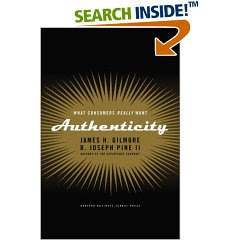
Back in March, at PLA, I remember Karen Hyman talking about authenticity in the lastest issue of Time magazine. It intrigued me enough to cause me to look into the issue of Time and then also interlibrary loan the book, Authenticity: What Consumers Really Want by James H. Gilmore and B. Joseph Pine II.
While the book is definitely geared towards business I think there are lots of ideas that we in the library field can take and use to our advantage with our customers. Gilmore and Pine talk about why we buy what we buy and that currently, people purchase based on how well the items reflect what the person wants to say or project about themselves. Consumers will consider experience and products more real if they have a hand in creating it themselves. What it boils down to is creating an experience that is true to what you say you are.
Steven Bell echoed these sentiments at the FutureTech for Libraries Symposium in June. He explained that we are in an experience economy and that we need to be aware of the expectations that exist regarding services and technology.
So what does this all mean for libraries? Well, let’s think about a few key questions:
- What expectations do users have about your services? Are they positive or negative? Do you meet those expectations, even the negative ones?
- Are your customers able to personalize their services? Do you offer pointed email advisories? Can they customize their experience on your library’s website?
Gilmore and Pine say “Be what you say you are by finding your very own original way for customers to experience your offering in the places you establish” (p.152). It isn’t an easy proposition. It may take lots of work to make the vision and missions of our institutions to match and exceed positive expectations that people have about libraries of all types.
Important to remember is that “What you’ve done is what you are, and what you do is who you become” (p.218).
Sounds like Kevin Costner in Field of Dreams, “If you build it, they will come.” Maybe that is exactly what we need to do.
Goodbye Mr. Carlin
 George Carlin passed away yesterday. This makes me sad. Carlin was a comedic and linguistic genius as well as a defender–or perhaps practitioner is a better word — of free speech. Probably best known for his bit on the seven dirty words, Carlin shocked, but did not need to shock, to be funny.
His mind was brilliantly attuned to the absurdities of life, and his gift for language and physical humor allowed him to reflect those absurdities back to us in a way that both challenged and tickled our sensibilities.
George Carlin touched me. Literally. In college I was with a group that brought him to Rutgers for a performance . Before the show began I was charged with guarding his dressing room. The door opened and I felt a tap on my shoulder.
“Hey Buddy”.
“Yes Mr. Carlin”, I replied.
“Where’s the rest room?”
“Right down the hall to the left, Mr. Carlin.”
“Thank buddy.”
As “brush with greatness” stories go, perhaps this doesn’t make the top 10, but I was touched by his gentle manner and the way he called me buddy. I remember a lot of his material that night, but one of my favorite bits was his take on license plates:
- New Hampshire’s license plates say ‘Live Free … or DIE!!’ I don’t think I want to live in a state that actually mentions death right on their license plates. At the other end of the spectrum is Idaho’s license plates – they say ‘Famous Potatoes.’ I don’t know, I think that somewhere between ‘Famous Potatoes’ and ‘Live Free or Die’ the truth lies. And I think it’s closer to ‘Famous Potatoes.’
Goodbye Mr Carlin, and thanks for all the laughs.
Michael Stephens Interview with John Blyberg
If you haven’t read it already, get thee over to ALA TechSource and read Michael Stephens’ interview with John Blyberg. Lots of good stuff–I’m sure I’ll be returning and re-reading this piece for inspiration in the future. A points that jumped out at me (quotes are from John unless otherwise noted):
- I’ve come to realize of late that if a change in library services, technology-based or otherwise, isn’t well grounded in our core values and mission, it just looks funny. (Michael)
- [I]nformation use has become an expression of self–that’s not something libraries ever accounted for. When I talk about this, I refer to it as the “information experience” because, for the growing number of us who participate in the hive, we build our own network of information and interaction that accompanies us through our lives. We literally construct highly-personalized information frameworks and place a huge amount of personal reliance upon them. Ten years ago, this wasn’t the case.
- It’s true that we are the voice of authoritative knowledge, but we can package that in ways that are not so paternalistic and present ourselves as partners in discovery. None of this requires technology, but technology has become the nexus of collaboration.
John also discusses how the Darien Library is big on Danny Meyer’s book Setting the Table, which defines and makes a powerful argument for the value of hospitality. In one of those weird bloggy synchronicities, I randomly went from reading the TechSource post to Char Booth’s Infomational post, “Manners v. Hospitality“, in which she also references Meyer’s book (which I have also blogged about in the past.) One of favorite passages is:
“In every business, there are employees who are the first point of contact with the customers (attendants at airport gates, receptionists at doctors’ offices, bank tellers, executive assistants). Those people can come across either as agents or as gatekeepers. An agent makes things happen for others. A gatekeeper sets up barriers to keep people out. We’re looking for agents, and our staff members are responsible for monitoring their own performance: In that transaction, did I present myself as an agent or a gatekeeper? In the world of hospitality, there’s rarely anything in between.”
So when you’re done soaking in the TechSource post, take a look Meyer’s book. I’ll soon have a follow-up post on hospitality and customer service based my experience with customer service training at the Trump Taj Mahal this past week.
Follow-up on Food for Thought at R.I.T.
Jon Jiras was kind enough to send along the following information to post here at LG as a follow-up to the earlier Food for Thought interview. Congratulations to Jon and the entire Food for Thought team on a successful event and for providing a model for others to follow. The comments from participants definitely show the value of a campus library providing such a day — plus the fact that Jon says “steal this idea” with no attribution needed really rocks. I can hardly wait to see what 2009 bring for the FFT Team at R.I.T.!
Post–event update:
2008 Numbers:
Total number of session registrations: 578
Total number of people who registered online: 212
Total number of people who registered in person: 11
Total number of registrants: 223
Staff: 186 ; Faculty: 19 ; Students: 3 ; Other: 4 Unknown: 11
If you count every seat in every session (of our original room assignments) we were over 73% filled and seven of our sessions filled to at or near room capacity.
Three sessions (Create Your Own Website, Optimizing Outlook, and Facebook and RIT) each had over 50 registrants.
An analysis of first names, indicates that 80% of registrants are female.
Extra Helpings Area:
We took a 36″ x 28″ whiteboard on an easel and had one of our artistic staff members use dry erasable markers to mimic a deli menu with “specials of the day” complete with branding by the co-sponsors Online Learning and Information Technology Services. This area saw only limited use. Eighteen one-on-one appointments were made. The questions ranged from setting up access to the campus wide staff portals, resetting passwords, and how to accomplish specific tasks in MS PowerPoint, MS Word, and MS Outlook. rewarding for both the staff who manned the area and the individuals who came to it with questions. Next year, I think we will move this area to the first floor near the entrance and registration desk where it will get more visibility and we can talk it up during the registration process.
Lightning Talks:
We had five more requests to present a lightning talk than spots available, so we had to turn down some requests. We secured the use of a 30 inch Chinese gong to indicate when the 5 minutes were up. We set up a laptop with a countdown timer set to 5 minutes that someone in the front row displayed to the presenters. The talks included staff from the following departments across campus: Center for Professional Development, RIT Ombudsperson, RIT Public Safety, Online Learning, Academic Intervention and Mentoring Program, Institute Advising Office, Barnes and Noble @ RIT, Wellness Center, Office of the Registrar, and the Library. We will definitely be offering this again next year.
Since the original blog post there have been some questions asked in the comments and through other channels.
1) Is this available to “steal” with credit?
Sure, that’s why I have provided so much information about the planning and marketing. Help yourselves, no attribution necessary.
2) What were the session titles in 2007?
Social Networking with Second Life, MySpace, and Facebook
Planning and Marketing RIT Events
To Bid or Not To Bid: Auction Tips Online and Offline, or, Why Pay Retail?
New Features of Microsoft Office 2007
New Features of Microsoft Windows Vista (offered twice)
Advanced iPod
Introduction to RSS and Blogging
Introduction to Web 2.0
Origami for the Office
Image Resources to Jazz Up Presentations
Sharing Videos and Pictures on the Web
Organizing with MS Outlook: Calendaring, Contacts, Notes, and Tasks
Self-Publishing with Lulu.com
TechnoStress Relief 101
Art on Campus Walking Tour (offered twice)
Create Your Own Web Site
Optimizing Your Digital Photographs
Wildflowers and Weeds of Western New York
Become a Published Author with InDesign and Photoshop
Easy Creation of Online Tutorials with Adobe Captivate
3.) What was your budget for 2008?
The budget this year was still under $1,000. Several folks have suggested we apply for a grant from the Office of the President, or Staff Council, or some other campus entity to pay for boxed lunches. Which is probably something we will consider.
Here are some results of the 2008 post-event electronic survey:
90 of the 212 registered users filled out the survey.
82% said the Food For Thought website was very good or excellent.
96% said the registration process was very good or excellent.
92% said the variety of sessions offered was very good or excellent
94% either agreed or strongly agreed that the event timing (2nd week of summer quarter) was appropriate
97% said they are likely or very likely to attend again next year.
And here are some of the comments:
The hardest thing about attending Food for Thought was trying to decide what topics to select for the day. There was so much to choose from, great conference.
Excellent program as always. Food For Thought is simply wonderful.
Very successful, love the content, love the idea.
Thanks for another excellent Food for Thought program. It was very well organized and informative.
All the workshops I’ve attended – this year’s as well as last year’s, have been most worthwhile for me.
I know how difficult it is to pull together a day such as this and offer my congratulations for an extremely worthwhile event!!!! Great job.
I truly enjoyed the session on “Understanding RIT’s Students”. This is something that every person on this campus should be required to attend!
It’s a great day and I hope you continue offering it in years to come.
I learned SO much and I’ve used stuff I learned in several sessions already today (and it was only 3 hours ago that I finished the sessions). But it was SO much information in one shot!
Love it. Keep it going!
I am very impressed with all the library’s staff. Good job.
The 1 hour sessions were a bit short. The Lightning Sessions rocked.
More Lightning Talks!
It was very informative, I enjoyed the sessions and learned a lot.
More craft sessions.
Lightning sessions were a nice touch. Do this again.
More sessions offering RIT-specific information – there were several this year, as compared to last year. I think they are very useful.
I would like to see a continuation of topics on how RIT is embracing online communities and usage among our students. RIT & Facebook was an excellent session, I very much enjoyed attending. In general the variation of topics was great.
Firefox 3.0 Is Here (almost)
Just a quick reminder, the new Firefox 3.0 will be available to download tomorrow, June 17, 2008. The new version has been ‘improved’ to include one-click bookmarking (is it really too complicated now?), phishing and malware protection, new productivity tools, and the ability to customize.
It will be interesting to see how well the roll-out goes. Now that Mozilla and Firefox are so much better known than in the past, will the ‘improved’ product be as exciting? My own experience of products I love being ‘improved’ has been poor–generally a loved product becomes something so different I change brands. With technology, improvements and upgrades make more sense than say with deodorant, soI hope that is true with this!
They are trying to create a world record for the most software downloads in a day. If you download tomorrow as part of the world-record quest, let us know how it goes. Me, I will wait a few days….
Suddenly Summer
I woke up last week—to steamy, sticky, humid NJ weather. After a month of rain, finals, several graduations and birthdays for my friends and family, I had completely missed the fact that Memorial Day had passed. Suddenly it was summer. I was not prepared—too hot, no knitting, and nothing to read. I knew what I had to do—get to the library.
First get my house cooled off: My house is old and does not have central air conditioning. The window units do ok, but they could not keep up with the temps last week in NJ. Plus, my bedroom unit was so loud that even when I was cool, I could not get a decent night’s sleep. The the “2008 Consumer Reports Buying Guide” gave me the information I needed to find a quiet, efficient, and inexpensive air conditioner that has me sleeping like a baby. And of course, all of my research took place in a delightfully air conditioned building!
Next, what to knit?: You may not know this, but if I am around, somewhere close by are two sticks and some string. Yup, I am a knitter. Not just a casual knitter, but a constant companion knitter. Summer is the perfect time to get a head start on those wonderful fall sweaters and afghans you want to make for Christmas presents. However, having a huge mound of thick wool draped over your legs is a serious summer don’t. I wanted something small, portable, and preferably not wool. I found the solution: “No sheep for you : knit happy with cotton, silk, linen, hemp, bamboo, and other delights” Amy R. Singer (746.432 Sin). This delightful book is filled with loads of projects that are perfect for summer—even a few sweaters I can wear come fall!
This was the first I have been to my public library as a patron since I began working in public libraries. I forgot how great it is (and how great the air conditioning is). Three of my neighbors were getting their new book club selections–we stopped and chatted about what the heat was doing to our gardens. I took out a chick-flic DVD that my husband would never put in the Netflix queue. It was a wonderful way to spend my afternoon.
When you are a librarian, it is easy to find that all your library experiences are now work experiences. I encourage library employees to go to your hometown public library as a patron. It is a great experience and one that is easy to forget.
What Would You Ask Bill Gates? (and Why Doesn’t YOUR Library Website Look Like This?)

Well, there is a small catch (of course). I (and everyone else on the planet) can submit questions and the “best one” will be chosen and asked of Mr. Gates….
I have no idea what criteria will be used to determine “the best” question…. but I thought it might be an interesting chance to recommend a question.
Another interesting aspect of this that I didn’t realize until I followed the link, is seeing what others are suggesting…. Some are serious, some are funny.
I thought it might be interesting if it happens that A LOT of LIBRARIANS suggest questions. (Who knows, maybe one will even be the “chosen” one.) I think it would be interesting if there were so many suggestions by librarians, on this otherwise non-library-related site, that the general public (or readership of this site) noticed. I wonder what they would think. I wonder what, if anything, would happen.
We out here in library-land have had our own “dealings with” Mr. Gates and we may have some specific questions we want to ask him…..
This is all taking place over on FastCompany.com – a magazine and site I really like. In fact, I have been thinking about doing a post about their site ever since I joined it because I think it is an interesting approach and one that libraries should consider.
It is a very “social” site, but it is a specific social site and not just a general social site for the sake of being a social site, such as facebook and/or MySpace*. What I mean by this is that you can sign-in and personalize your whole experience and use of this site. There are specific categories and interests (for this site they include “leadership”, “management”, “technology”, etc. all related to business… but things that I am interested in nonetheless). When I log in this is what I see:

So I have my own area with any messages or other information I might want – and I have controls on the right to edit my profile, post, invite others, send a message, etc….
Some libraries ARE doing things like this on their website, or on another virtual presence, and I am certainly not the first or only to call for this. However, not enough are doing things like this. As I was signing up for my account on fastcompany.com I couldn’t help but think about library websites as I went through all of my options and interests…. What topics am I interested in? Which newsletters and updates would I want to receive. What do I want my “homepage” to look like when I come here and sign-in… these would all be great features on a library website.
Look at this particular part of my page on fastcompany.com:
 I know it might be small here, but in that red box I’ve drawn I have all these MY things, and they literally say they are MY things: MY contacts, MY bookmarks, MY feeds, MY settings, MY network, MY recommendations, etc…. this really makes this MY page to me, for me, when I come to this site.
It also makes it much more specific, interesting and useful to me. I have already narrowed-down what aspects of this page/company I am interested in… and it is all ready for me right on the front page FOR ME when I sign-in here.
Additionally, right above that are the general topic areas for fastcompany.com – Innovation, Technology, Leadership, etc…. all interesting and attractive (to me) to click on and go right to what might be of interest. I can also easily find people, groups, and blogs, of interest to me. This provides me a chance to create an even more specific, smaller, community within this community for me. I joined the Leadership group and the Technology group here, and even started my own, called Librarians just because I am like that! 😉 I like to put libraries and librarians in wherever ‘technology’ is. So far, no one has noticed it, but I wonder what might happen if they did. (“Librarians!? Technology and business?! Huh!?”)
I also just happened to see my.barackobama.com . If you check out this site you can again see that this is the Barack Obama site for YOU. Here is what it can look like:

It can have everything for ME – My People, MY Network, My Blog, etc… I keep finding that sites like these provide people an opportunity to have a blog right within them – on this topic of interest to them. They don’t need to go to any specific blogging site (like blogger or wordpress or whatever – not that there’s anything wrong with them). These sites are providing them with blogging spots, on sites of their own interest, where others come who have the same interest, thus providing a built-in readership for their individual blog. I think a lot of people wonder who would read their blog and why. People hear about “blogs” all the time, but maybe they aren’t ready to actually GO to a blogging site, sign-up and start blogging. But maybe on a site they like and use, with an easy way to blog right there, they might just do it. This is something libraries could provide…
Maybe these are not earth-shattering things, but it seems to me that I am seeing more and more websites like these. Library websites are already, for the most part, behind the times, and as more of these sites go to more and more personalized interfaces, we don’t want to be another generation behind.
So, anyway, submit your potential question for Mr. Gates (by posting it in a comment on the post) and also take a little tour around FastCompany.com … and my.barakobama.com, if you’re so inclined.
———————————–
* Don’t get me wrong, I (of course) think you can create for yourself and have a very personalized and meaningful experience on facebook….. but again, that happens when you create a “community” within a “community,” which is what I feel happens within fastcompany.com
Food for Thought at R.I.T. : An Interview with Jon Jiras
 Food for Thought, a unique day-long learning opportunity organized and hosted by R.I.T Libraries, came to my attention last week via a Facebook update status by my good friend Jon Jiras. I was immediately intrigued by the idea of a campus library leading the way in providing training for all staff on campus in such an innovative format and sent Jon a message asking if he would agree to be interviewed via email for the LG.
Jon is currently Library Technologist at the Rochester Institute of Technology Libraries. I first met Jon in 1996 when we both began working at Hobart and William Smith Colleges in Geneva NY. We were both recent graduates in our first professional librarians positions. Jon was a cataloger while I was a reference/ILL librarian and we collaborated on many projects during our two years at HWS, including the creation of the library’s first web portal. We have kept in contact throughout our careers and it is my pleasure to be able to present this interview with Jon that highlights a program that I am absolutely positive others will want to replicate at their own library.
Janie: Can you tell me about the background behind Food for Thought? In particular: What is your role? How did the idea get started for such a day? What were the original goals of the program for the organizing committee?
Jon: The origins for Food For Thought (FFT) stem from two developments. First, a somewhat similar annual event for faculty has been sponsored for several years. The Faculty Institute on Teaching and Learning had been moving away from application specific training and more toward classroom pedagogy and educational innovation. Our library director had been attending and participating in this annual faculty event since its inception. She noticed that the shift away from technological training at this event created a opportunity to develop a day long event that focused on application training.
Secondly, as part of the Library’s strategic planning process, we identified university staff as a constituency for which additional library services could be developed. We noticed that most of the registrants coming to the library’s long standing series of technology training workshops were university staff. So we decided to leverage this success by creating a full day of learning events. No one had ever (to our knowledge) sponsored a complete day’s agenda of learning sessions directed at staff.
A small internal team was formed in Fall of 2006 (four full-time Library staffers) to conceptualize, plan, and promote the project. The team consisted of an array of staff from four different Library departments: Library Technology Services; Reference; Serials/Acquisitions; and Marketing/Communications. I was the representative of the Library Technology Services department and chaired the Food For Thought team. I was responsible for coordinating the efforts of the team, keeping them focused, and acting as liaison to library administration. Organizing and developing this program was so rewarding that I volunteered to chair the team again for 2008.
Some things the FFT team established within the planning process included:
- We decided to format an entire day (9am – 4pm) with multiple “tracks” to allow for the most flexibility to accommodate people with limited free time.
- We wanted to make it like a conference with registration, name tags, tracks, and simultaneous sessions.
- We determined the optimal date to be June 14, 2007; for many reasons all tied to timing and the likelihood of having the most staff available on campus
- We named the program “Food For Thought: A Day of Free Techie and Not-So-Techie Learning Sessions for RIT Staff”
- We established available session venues within our building, spanning three floors.
- We decided to spend the bulk of our limited budget on 3-ring binders to be given to every person who reserved a spot in any of our sessions.
- We decided to spend the remaining budget on light refreshments.
- We set out to brand the event and collaborated with a student employee and another library staff member to create the original graphic identity.
- We involved the entire Library staff in not only sharing ideas, but in helping to shape the schedule. Most of the instructors of the sessions were Library staff.
- We decided to offer “Brown Bag” Lunch-time sessions, to maximize our number of possible sessions and to accommodate those who might only be allowed release time during their lunch hour.
- We decided NOT to invite a keynote speaker. There were some who felt a shared experience of a keynote address would be welcome. FFT team members decided against this as it conflicted with the “a la carte” nature of workshop sessions.
- We knew that many staff could not take the entire day, so we wanted to provide a broad range of topics so they could pick and choose which sessions interested them the most.
The session topics were carefully chosen to provide a balance between application-specific instruction, technology trends, and fun diversions.
Presentations were solicited in three ways.
Individual presenters pitched specific sessions to the FFT team. (For example: Advanced iPod; Create your own website; and Origami for the Office).
The FFT Team invited library staff to brainstorm sessions at an open meeting. Several sessions resulted from this meeting. Technostress 101, The Web 2.0 series, and Organizing with MS Outlook were pitched to FFT team at this session.
In addition, the FFT team approached individual library staff and requested specific topics be covered (such as Windows Vista, MS Office 2007, Adobe Captivate, and the Art on Campus Walking Tour).
This mixture of presenters pitching ideas, the FFT team holding a staff-wide brainstorming session, and the FFT team soliciting specific presenters for specific topics produced a well rounded list of workshops.
We specifically asked that presenters not offer workshops that are already on the list of technology training sessions that the library offers as part of its technology training workshop series that runs throughout the year. Instead, we ask them to develop new workshops on new topics. This is their chance to present on a topic that might not normally be covered in our regular training series. Several of the 2007 FFT sessions became regular sessions in our workshop training schedule.
The Food For Thought team had a total operating budget of $1,000. Here’s a list of expenditures made in the first year:
2007 FFT Budget Expenditures:
3-holed paper: $ 35
3-ring Binders: $ 435
Name Tags: $ 3
Food: $ 200
Marketing: $ 200
Buttons: $ 50
Total: $ 920
The 2008 budget is not yet finalized, but we are planning to spend significantly more on food and to drop the binders in favor of simple paper folders. We will still keep the entire budget at under $1000.
Janie: How many attended last year and what was the response from those who attended? Did you get a good cross-section of employees who work at RIT attending? Is this program open to all RIT employees?
Jon: Food For Thought is directed at RIT staff. However, it is open to any member of the RIT community. RIT staff makes up largest group to attend the event – indicating that the target audience is being served.
2007 numbers:
Total number of people who registered online: 196 (plus 15 on-site day-of registrations) = 211
Total number of session registrations: 546
Staff: 169 ; Faculty: 21 ; Students: 5 ; Other: 1; Unknown: 15
Number of people registering for:
0 sessions: 11
1 session: 36
2 sessions: 46
3 sessions: 33
4 sessions: 31
5 sessions: 39
52% of registrants registered for 3 or more sessions – indicating that a majority attempted to devote most of their entire day to this event.
Several of the sessions had to be moved to larger venues. We took over a large lecture hall in an adjacent building that holds over 200 people and moved as many sessions there as possible.
If you count every available seat (in the original selections of rooms from 2007), we would end up with an event capacity of 790 seats. The event was 69% filled which is an extraordinarily high response rate.
2008 numbers — so far this year (with 10 days to go till registration closes) we have the following numbers:
Total number of people who registered: 167
Total number of session registrations: 497
Staff: 147 ; Faculty: 16 ; Students: 1 ; Other: 3
0 sessions: 6
1 session: 28
2 sessions: 35
3 sessions: 32
4 sessions: 27
5 sessions: 39
A post-event feedback survey was sent to registered users. We received 75 responses. Ratings for individual sessions were generally “Very Good” or “Excellent.” Ratings for the day as whole were generally “Very Good” or “Excellent.”
Comments from the feedback survey can be broken down into three general areas:
1) Comments about time: These included comments about breaks between sessions, session lengths, the timing of the event, and the number of sessions offered. One frequent comment was that a realistic lunch break should have been factored into the schedule. (That suggestion was incorporated into the 2008 event)
2) Ideas for next year: This category of comment was the most extensive and included these suggestions:
Movie Making Software
Help Grad Students Navigate Thesis Writing
Separate class on PhotoShop
More academic topics like surveys in different disciplines
More tours (printing facilities on campus, Hub, president’s office, dorms).
More fun topics for brown bag sessions (movie discussions, video game discussion etc..
More advanced coverage of In-Design and Creating a Web Site
Very basic class in computers for those who do not use them
Mac orientated sessions
Home computer maintenance
3) Criticisms and suggestions:
Binders were not necessary
Techie sessions seemed much too basic
More extensive handouts
In addition to the survey, the library staff has received many compliments behind the scenes. The Food For Thought Team was nominated for a campus –wide staff excellence award.
Janie: How have you modified Food for Thought this year?
Jon: We repeated only three 2007 sessions in 2008: Create Your Own Website, MS Office 2007, and MS Outlook. All three were highly attended in 2007 and continue to draw well in 2008.
Last year all sessions fell into one of three themes: application specific training, technology trends, or fun diversions. For 2008 we have developed a fourth theme: RIT-specific information. Several workshops were developed with this fourth theme in mind, such as Virtual Worlds: Touring the RIT Island in Second Life, Understanding the RIT Student, Basic Sign Language and Deaf Culture, and Lightning Talks.
Other sessions were consciously modified to incorporate specific aspects of this university’s setting. For example, a proposed “Facebook” session was broadened to become Facebook and RIT. No longer just an overview of Facebook, it will now include information about how Facebook is being used on this campus by various departments and student groups.
For 2008 we have added two new features:
1) We have added an “Extra Helpings” area in the computer lab on the second floor of the library. It is modeled along the lines of the Apple Genius Bar where folks can book one-on-one training sessions with technology staff to get personalized help with whatever technology, application, or other questions they may have. In this way, the content of the day gets to be driven by the registrants themselves. Instead of being limited to a select list of sessions, registrants can bring their issues and needs to the attention of training staff. We collaborated with other campus departments to arrange for additional staffing of this area for the day. Knowledgeable and helpful staff from the university’s central Information Technology Services group and Online Learning are partnering with the Library to staff this area the entire day.
2) Lightning Talks: This special session is modeled along the lines of unconferences and Barcamp where the content of the session is driven by the registrants. Staff from across the campus have agreed to give 5 minute micro presentations on technology they use, services they provide, or anything they think other RIT staff may find of interest. So far we have commitments for 9 (of the 10) 5 minute sessions, so we are confident that all of the micro sessions will fill up.
Both of these new initiatives involve a greater degree of cooperation and collaboration with other campus units. The “Extra Helpings” area has been a great opportunity to reach out to other campus units and get their buy-in with the day as a whole. The “Lightning Talks” in particular allow other campus units to present topics during the day. Limiting their presentations to 5 minute micro-presentations gives them the added advantage of not having to prepare too much for the sessions. To line up the Lightning Talks library staff approached their contacts across campus to pitch the idea. The mere process of approaching these outside departments, discussing the opportunity, and offering the possibility is a networking opportunity and creates awareness of the event and buy-in.
The 2007 Food For Thought event had a few sessions that were co-presented with other staff from across campus. For 2008 we encouraged presenters to collaborate with other campus departments. As a result, one in four sessions have co-presenters who are non-library staff. The “Lightning Talks” session and the additional staffing needed for the “Extra Helpings” area are convenient ways for non-library staff to participate in the event and are a direct result on the 2008 emphasis on encouraging collaboration.
Janie: What topics are proving to be most popular this year? Is this different from last year?
Jon: For both 2007 and 2008, workshops that list specific applications and/or websites in their titles tend to receive more registrations than workshops that do not mention them.
Overall registrations have been very good. We anticipate having over 250 individuals register
for 2008.
Janie: What obstacles (if any) did you have to overcome to get Food for Thought off the ground last year? How long is the planning process?
Jon: Here’s the event planning timeline for 2007:
Feb 20 – FFT team meeting prior to prepare for the Library staff brainstorming session
Feb 26 — hold library staff brainstorming session on possible sessions
Mar 23 — deadline for session presenters/commitments
Apr 13 — deadline for schedule/program confirmation, room reservations
May 15 — publicity kick-off and online registration begins
June 11 – presenter handouts due
June 12 — end registration
June 14 — hold event
A major deliverable for the event was the event website with registration and schedule selection capabilities. It’s a PHP / MySQL website developed in-house: http://library.rit.edu/foodforthought/
A staff view that shows the number of registrations for each sessions, the list of individuals registered for each session, and overall statistical information was created. All presenters were given the username and password to access this staff view of the FFT website.
As with any large event that involves multiple participants and large numbers of people – it’s the details and logistics that are the most challenging.
Janie: Is this a model that can be adapted elsewhere?
Jon: The Rochester Institute of Technology is a mid-sized, private, academic university with 1,900 staff, 1,300 faculty, and 16,000 students. This program may have to be scaled down (or up) for smaller (or larger) institutions. We have declared 200 registrations (just over 10% of staff) to be successful. The hardest part is lining up quality presentations that don’t compete with other staff development opportunities on campus and have presenters willing to present them. The RIT Libraries is fortunate for having a number of librarians and technical staff who not only have the ability to develop and present quality presentations, but more importantly, the eagerness and willingness to do so.
Janie: Is there any other information you wish to share?
A large part of the time and effort of the FFT team was spent on marketing and promotional materials. We used all of the following as promotional devices:
– PowerPoint displays (teasers) on our Plasma Screen.
– Bookmarks (handed out at Circ).
– Pins (tin buttons) in two different designs, worn by our entire staff for the weeks leading to the event.
– Full-color Posters (variety of graphics; in three sizes- tabloid, letter-size and a custom size).
– Electronic (email) messages sent on multiple dates leading to event.
– Created a customized website with original graphics, an interactive component and complete with online registration capabilities.
– Advertised on thermal Circulation Desk receipt printers (like a store imprints a message).
– Outdoor (exterior) Digital Message Boards (animated text) for three weeks prior.
– Promoted the event on the Library web site, including our scrolling News Ticker that highlights special events and services.
– Published an article and our Logo (branding) in campus newspaper News & Events one month before the event.
– Highlighted (advertised) the event on the Library’s “What’s New?” web page.
– Created custom Binder Covers (color) for each binder (200) we prepared.
– Created color Cover Sheets for each presenter’s section within each binder.
– Created and printed out a condensed complete Session Schedule as hand-outs.
– Created a Press Release, sent to University News.
– Designed and created PowerPoint Templates to assist presenters in creating their PowerPoint slides; ensured a consistent branding and a format that was uniform (optional if they wanted to use the templates).
– Created a Facebook event page and encouraged library staff to invite their RIT Staff Facebook friends to the event via Facebook.
A sample of our promotional materials is available here: http://library.rit.edu/foodforthought/FFT2008MarketingSamples.pdf
For both 2007 and 2008 we asked all library staff to reach out to their staff contacts across campus to get our promotional material into areas we don’t normally cover. Instead of merely placing posters in hallways and public areas, we devised a way to get our posters into staff break rooms, copy rooms, and other staff-only areas.
We requested all library staff to take a variety of posters, flyers, bookmarks, etc… and hand deliver them to their staff contacts across campus. We had library staff record where they dropped off this material and who they had contacted about it. As a result, our promotional material reached areas of the campus we have never previously covered and the mere act of reaching out and visiting other departments on campus drummed up interest.
Janie: I would like to thank Jon and the entire Food For Team at RIT for providing the readers of Library Garden with such a detailed overview of their highly successful program and for all the planning process information. Best wishes with all of your plans for June 10th and please keep us updated after the event with new statistics.
—————————-
Jon Jiras has worked at the Rochester Institute of Technology Libraries since 1998. His interests include the support, maintenance, development, and integration of library technologies. For more information about this event please contact Jon at jjjwml at rit dot edu.
Keeping up with Internet Stats: Some of Robert Lackie’s Favorites—What are yours?
 Last week, I did a quick presentation at my own Rider University Libraries for the CJRLC Tech Group May meeting attendees, and some of the sites I discussed and demonstrated were sites I subscribe to or visit regularly to keep up with various Internet statistics—that is, where to go to find out who’s hot, who’s not, and who’s got the search market cornered, so that I can invest big bucks. 😉
OK, seriously, I have no real $$ to invest, but I do invest a lot of time on the Web, and when I am interested in knowing more about specific or general U.S. or world Internet traffic and other stats, I consistently go to my favorite Web locations (or have them come to me—I just love RSS!). I continually poll those who attend my sessions to see who they think dominate certain subject or topic areas, including general search engines’ market share of searches. I also am somewhat surprised that many people that I talk to at workshops, conferences, and other librarian and teacher get-togethers do not know about these stat sites, or at least much about them. When I show them how I know what I do about some of this, most quickly jot down the URLs or efficiently add them to their bookmarks or RSS feed readers. And since I just answered three messages about this, I figured—sounds like this could be a good blog post before I head off on a long drive to Arkansas for my son’s wedding! So, here they are, in no particular order of preference:
 Alexa – They have a lot to offer, but I love their Traffic Rankings section with it’s “Top 500 Sites” and “Movers & Shakers,” as well as their Directory with its “Popular Categories,” and I like their blog, too.
 comScore – They also keep me coming back, and I really like their blog and Data Center, but it is their Press Releases section that I constantly review—I think you will really appreciate these.
 Nielsen//NetRatings – Definitely in my top three, I like their Free Data and Rankings section, but I find myself constantly coming back to their Press Releases section (you can do a search or scroll down the page to find previous releases).
So, do you like these as much as I do? Do you have different favorites for keeping up with Internet stats that you would like to share? I am sure that everyone would love to hear from you!
P.S. If you are feeling somewhat nostalgic (life from 15 months ago), look at the current sites above and compare it to a Library Garden post I did on U.S. Web search traffic from Jan. 2007 from comScore.
-Robert Lackie
Technorati Tags: Internet statistics, search engines, site popularity, traffic ranking, Library Garden


 Library Garden