Twitiquette: A Short but Helpful guide to Twittering Conference Meetings
Man oh man was there a lot of twittering going on at ALA midwinter. Ain’t it great that so many librarians are using Twitter to shed light on the decision making going on in Committees and let the rest of the organization know — in real time — what’s getting a thumbs up or a thumbs down, who’s arguing for what, and why.
Revolutionary.
As Karen Schneider brilliantly put it, (ALA) “Council may not be interested in transparency, but transparency is interested in Council.” All good. All good.
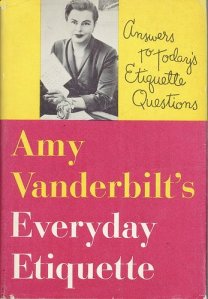 Since this radical real-time transparency thing is all still kind of new to some of us I thought a short guide on the etiquette of live twittering of committee business might be helpful:
- Twittering the real-time decisions of your committee: GOOD
- Twittering snide, insulting, remarks about your fellow committee members while they speak: NOT GOOD
- Twittering snide, insulting remarks about your fellow committee members while they speak and marking it with #ala09 hash tag to ensure that the widest possible audience sees your comment: REALLY VERY NOT GOOD
Yes, this really happened. No, I’m not naming names. I can tell you this though: My respect for the committee member that was twitter-slagged remains in tact intact. My respect for the slagger is in the toilet and I’m reaching for the handle.
I’m still deciding how (or if) to address what happened. Any suggestions are welcomed.
Friday Fun: Nap your way to success
[Note: this was a Toastmasters speech I gave last year, slightly revised for your reading pleasure.]
It has long been suspected, but scientific studies prove it: Napping is a great way to make it to the top.
If you don’t believe me, consider this: A study released by the National Sleep Foundation says that taking afternoon naps increases your productivity.
A Survey of American workers supports this finding with 40% reporting that daytime drowsiness prevents them from doing their best work.
But Napping doesn’t just improve our productivity, it may even save our lives.
 Consider this: Fatigue has widely been cited as a contributing factor to both the Three Mile Island and Chernobyl accidents. The Pepsi syndrome? I think not. The ambien syndrome, maybe… You know a few well-placed nap rooms at our nuclear facilities could make the difference between active workers and radioactive workers.
Sleep deprivation has also been cited as a contributing factor to numerous railroad accidents. Engineers need to spend less time on their feet and more time on their… caboose.
There are many studies that show a marked loss of alertness in the afternoon. Did you know that more accidents occur between 2 p.m. and 4 p.m. than in any other 2 hour span? And when you consider how many drunk people are bumping into things at 2 am on Saturday night, that’s a truly sobering thought.
So on one the hand we have the possibility of sleepy employees and train derailments and nuclear destruction, and on the other hand we have alert employees and an attentive, productive workforce. And yet Nap enthusiasts still find employer resistance to catching a little cubicle snooze. Why?
Why why, why?
Because the poor, sweet, gentle, nap has been unfairly stigmatized as the luxury of the rich or the indulgence of the lazy. This was probably epitomized in the classic Seinfeld episode when George Costanza worked so hard to conceal his dirty little napping secret: A nap chamber custom built into his desk. But as dumb and lazy as George Costanza was, he knew enough to avoid the stigma of the nap!
Unfortunately, the taint of napping in the workplace is all too real, so nap rooms may not soon be coming to an office near you.
But fear not fellow dozers, nodders, sleepers, and snoozers, all is not lost! Recent research in the field of creativity suggests that a mere BREAK in the “attentive activity” can lead to clearer, more creative thinking.
Scientists who have spent millions of dollars and years of their lives studying the phenomenon call this an “incubation hypothesis.” You and I call it “taking a break.”
According to the “incubation” hypothesis, it is best if we incubate once or twice a day for a period of 10-20 minutes and we should engage in no activity during this incubation. The incubations’ only function is to divert our attention from work, thus releasing our minds. We are thereby enabled to freshly engage in our tasks and do better creative problem solving when we return from the “incubation”.
I think Archimedes would wholeheartedly agree with the incubation hypothesis. In Greek probably, but he’d agree.
You remember the story of Archimedes? Eureka! Archimedes made a major scientific discovery while soaking in the tub. It’s suggested that Isaac Newton discovered gravity while lounging under an apple tree. And Frederick Banting, who dreamed how insulin could be used to control diabetes – and won the Nobel prize for his discovery-would certainly agree that a little shut-eye can work wonders.
So why do most employers still frown on napping and slacking? Maybe nappers need to get the research into the hands of a good PR firm. I can see the billboards now: Save a life, take a nap.
There is at least one major American company seems to get it. Google!
Google permits their employees to spend 20% of their time on non-work related activities. Stacy Sullivan, Google’s HR Director says,
“We want to take as much hurry and worry out of people’s lives as we can, because a relaxed state of mind unleashes creativity. Everybody’s on flextime here, so we don’t reward face time or working super-long hours. We just measure results.” And as we all know, the results at Google have been pretty good. Hey, maybe George Costanza had it right after all… Maybe sleeping our way to the top really is the way to go.
I will leave you to ponder: To drowse or not to drowse, That is the question.
Now if you’ll excuse me, I have a great deal of work to do so I’d better get back to my desk and, uh, nod off?
You Never Know Who Your Patrons Were
Internet Futures – Genevieve Bell Speaks at ASIST

Pete’s last piece on future issues reminded me to post my summary from an intriguing talk I heard in late October ’08 while at the ASIS&T conference in Columbus Ohio, I was delighted that one of the plenary speakers was Genevieve Bell, an ethnographer, who is a Senior Principal Engineer and Director of User Experience with Intel’s Digital Home Group.
In her charming Australian accent, she promised to give a provocation rather than a speech. See what you think of her ideas.
She posed the questions: “What comes next for Web? For the information/knowledge economy?” Here are a few of her predictions/observations:
- The Net has gone “feral,” now gone well beyond the PC and laptop – to cell phones, TVs, GPS, game consoles, embedded devices with IP backbones. Some people will never encounter the Web on a PC, but through consumer goods, smart printers, etc. Web usage models will continue to change shape – more transactions, but much less surfing.
The Net will increasingly bring us things we didn’t have time to attend to in real time (like those all important TV shows we missed).
The Web continues to collapse time and distance and will increasingly be used for staying in touch with people. She noted that 10% of people in Tanzania have a cell phone, 90% have made a cell phone call. She also said that blogging will continue to experience exponential growth, some underrepresented voices now being heard. Most people blogging are women from 23-45 yrs. old (Hey, I’m almost young enough to have made this group 😉 Many people are interfacing with the Web through intermediaries, for example, some illiterate people living without electricity in 3rd world countries are getting daily “email” deliveries, read aloud to them via cell phones by children and friends.
There will be an end to the “anglosphere.” In 2008, Chinese internet users overtook US users by about 253 million. English will soon end as the dominant language. New sites, new experiences, new services will arise. With this brings the inevitable incommensurability because it is difficult to make translations, especially for slang and idiomatic expressions.
There will be different modes of connectivity, new experiences will require more bandwidth.
Different payment structures are evolving, e.g., pay as you go vs. all you can eat, vs. capped downloads (up to a certain amount will be included, but then large fee is charged for more).
There will be more government regulation for the Net, controlling it, limiting access, regulating practices. Massive regulation is already happening across the world.
Increased socio-technical concerns – new anxieties, old anxieties. The list of things we are concerned about is growing. (OY! More to worry about in 2009).
Disconnection and switching-off are an interesting phenomenon (some people are now planning vacations around “dead spots” so they can switch off).
Hmm, “spring break” cruise anyone? Our family is planning one to the Caribbean this March in search of a “dead spot” (and, BTW, some warmer weather, NJ this winter is appalling – lots of icy treachery this week).
Nine Predictions and 5 3/4 Questions for the New Year
A very Happy New Year to readers in the Garden!
I’ve come across two little gems that have helped get my head and my heart in the right place as I embark on another (universe willing) 365 revolutions.
 The first is Branding Guru Tom Asacker’s Nine Predictions for 2009. This isn’t your your typical “let me tell you how it’s gonna be” upchuck of New Year prognostications. I love Asacker’s wit, warmth, and wisdom. If you like his predictions, I highly recommend subscribing to his blog feed and/or his insight-packed and highly readable and entertaining books. (Note: Asacker’s predictions are posted as a PDF. If you want to read in more bookmark-cut-and-pastable html, see link at: http://www.smallbusinessadvocate.com.)
 The second gem is Michael Stanier’s The 5.75 Questions You’ve Been Avoiding. It’s a very nice flash animation with a drummy-jazzy soundtrack. Have a pen handy or plan on watching it twice! If you dig it, check out Michael’s blog, The Possibility Virus.
Bon Appétit!
As for me, I’m not big on New Year’s Resolutions. But one of my intentions for 2009 is to continue to ask and answer the question, “What is the need here, and how may I be of service?” AND to remember to factor my own needs into the equation.
Wishing you all good things in 2009!
A New Year, A New Book on Academic Library Research
 Happy New Year to All!
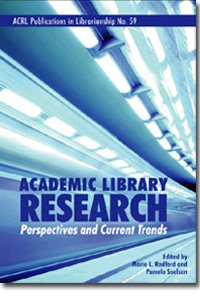
Although it is otherwise a slow news day, as we all await the start of 2009 and look ahead to a new year unfolding. I am so thrilled that “Academic Library Research: Perspectives and Current Trends,” which I co-edited with Pamela Snelson, Director of Franklin & Marshall College Library has just been released. This book has been in the making for over 5 years, and I haven’t actually held a copy in my hands yet, but I’ve been told that my copies are in the mail! We take a look back at academic library research since 1990, showcasing this time of rapid, revolutionary change. I co-wrote the chapter that summarizes research on reference (face-to-face and virtual reference modes) with Lorri Mon and predicts trends in reference over the next few years.
The book is #59 in the ACRL Publications in Librarianship series, edited by Craig Gibson. ACRL/ALA has published the book just in time for it to be showcased at ALA Midwinter in Denver which I’ll be attending. According to the Press Release the book “updates traditional topics that have undergone exceptional, and in some cases unexpected, change since 1990 as well as reaching into new areas. It combines theoretical scholarship with real world research, including case studies and user surveys, designed to inform practice. Part I highlights significant perspectives and trends such as reference service, information literacy, collection management, knowledge organization and leadership. Part II features two chapters on recently developing evaluation methods, including usability testing and measuring library service quality through LibQUAL+.
It is always a joy to see a finished product finally published and out there to add to the library literature. Am now already involved in two more book projects, one of which is an edited volume (co-edited by Dave Lankes) of reports from the field and research papers from the Reference Renaissance conference. Would be amazing if the Ref Ren book, to be published by Neal-Schuman could be out by the end of 2009, will be fun to work towards this goal.
I Hire People For Two Reasons
“I hire people for two reasons — and this is true– I hire people if they’re enthusiastic and if they’re nice. And to me nothing else matters… If they have those two things, we can teach ’em.” –Bobby Flay, at Learning2007 Conference.
From: http://www.learning2008.com/Learning-2008-content/voices.htm
More Goodies:
Speaking of Nominating
There have been dozens of posts made over the last few months reminding everyone to nominate their favorite Mover and Shaker from libraryland for the annual Library Journal supplement. I myself am in the midst of polishing my M&S nomination for submission before the deadline on Monday November 10th, so I thought while everyone was in nominating mode I would post a reminder that nominating season need not end on Monday!
There are lots of ALA professional recognition awards that you can nominate your colleagues and institution to win — and many of the awards given by ALA have a December 1st deadline, giving you three weeks to put together your nomination!
I spent the last two years serving on the ALA Awards Committee and this year I was appointed the chair of the jury for the ALA/Information Today Library of the Future Award. This is not only a really prestigious award but a really cool one too — as is evident by the list of past winners. Look over the requirements, then think about what your library is doing and how you might possibly qualify:
… to honor an individual library, library consortium, group of librarians, or support organization for innovative planning for, applications of, or development of patron training programs about information technology in a library setting.
Criteria should include the benefit to clients served; benefit to the technology information community; impact on library operations; public relations value; and the impact on the perception of the library or librarian in the work setting and to the specialized and/or general public.
I know, for a fact, that there are many libraries with innovative, forward-thinking and amazing technology-focussed programs that are deserving of this award, so step forward and nominate yourselves or your colleagues.
Election Night and Public Libraries
 Princeton Public Library will be hosting an Election Night at the Library event for the third time tomorrow night. The library has always been open regular hours on election days and starting in 2004 we decided that as the “community’s living room” we were the perfect venue to host a non-partisan, family friendly election return event. We serve food and drinks, have political commentary, watch the returns on multiple screens, and stay open late — generally until 11 pm, but the year of the hanging chads we stayed until after midnight. Leslie Burger hosts the event and Ingrid Reed of the Eagleton Institute provides the commentary. It really is a wonderful way to spend election night and a great way for the library to prove its value as a Third Place.
I started looking around to see if this idea had caught on at other libraries and I did find that Tigard Public Library in Oregon will be hosting an Election Watch 2008 event and that Towson branch of the Baltimore County Public Library will also be doing an Election 2008: Returns after Dark event. I am sure that there are other public libraries hosting events, if so please comment here and let us know what you are doing!
I was somewhat surprised, however, during my quest to find other library election parties to also discover that many, many public libraries close on election day. I was a little baffled by this, to be honest, especially since Princeton Public Library has always been open and it is the only public library that I have worked at since emigrating from Canada. At first I assumed that some libraries closed because they are polling places. That turns out to be partly true, but it seem that many more close because it is consider a legal holiday in many states, including New Jersey (thanks Wikipedia).
Should libraries remain open on election day and provide a non-partisan forum for their community to gather and participate in watching returns — or should they close in honor of the occasion? I obviously side with the former (even though I am not able to vote, yet) but I am sure there are other viewpoints and I would love to hear both sides.
Giving Effective Presentations
Aaron Schmidt has a really great post over at Walking Paper on “How to Give a Good Presentation.” It’s definitely worth reading through, including many super comments.
 A few months back I posted a collection of links, “Talk Good: How to Give Effective Presentations“. In addition to those links though I’d like to add a few of my own thoughts to this conversation. First, let me say that I prefer to frame this as giving “effective” presentations rather than “good” ones because effective implies that you’re actually trying to, well, have an effect. And I think that one of the most important elements of any presentation — the element that makes it much more likely that your presentation will be effective — happens before you’ve written one word or found one cool image for your powerpoint. The most important element is asking the question, “What do I want people to do as a result of seeing/hearing my presentation?”
Should your slides be graphic heavy? Text Free? Should you provide handouts? Should the presentation be posted, and if so in what form? Should additional information be included in the posting? My answer is, it all depends. I think it makes absolutely no sense to dictate the answers to these questions without first asking, “what am I trying to achieve?” The next question of course is, “and how can I best achieve it?” How you answer this question dictates your content and sequencing.
There are also many variables that will affect how you craft your presentation: Just a few variables of the top of my head:
- Who will be in the audience? Is it heterogeneous or homogeneous? Are there certain people in the audience with more influence that I would like to reach?
- How large is the audience? Will I get to mingle? Am I miked, or is it more intimate?
- What is there outlook?
- What is their predisposition to change their behavior? Are they a friendly or resistant audience?
- What is their knowledge level?
- How much time will I have to present?
- How much other information is being thrown at them (am I the main act, or one presentation of many?
- What technology tools do I have at my disposal? Live internet? Projector? Just a microphone?
- What is the room setup?
- Will the presentation, or parts of it, be archived or made available online after the fact? Do I intend this to ever be seen again?
- Is the presentation intended to be instructional? provocative? informative? heretical? inspiring? challenging?
I’m sure you can think of more variables that you’ve considered when crafting your own presentations. The important thing while preparing is to continually refocus yourself on what you are trying to achieve and critically evaluate the content and sequencing of your presentation to make sure everything supports and nothing detracts from your goal.
A few other ideas that may enhance the effectiveness of your presentation:
- Share your presentation with others before you do it and get feedback to see what’s working and what isn’t. Inevitably, you will have written things that are clear as crystal to you, but clear as mud to others.
- If it’s appropriate to the presentation, try to make it as interactive as possible. Ask questions. Encourage audience members to talk to each other. Doing this early in the presentation with a provocative question can create an immediate buzz and get a lot of energy flowing.
- Conclude the presentation with a challenge or a request. Ask something of the audience. Ask them to commit to doing one thing differently.
What are your tips? What’s worked for you?


 Library Garden